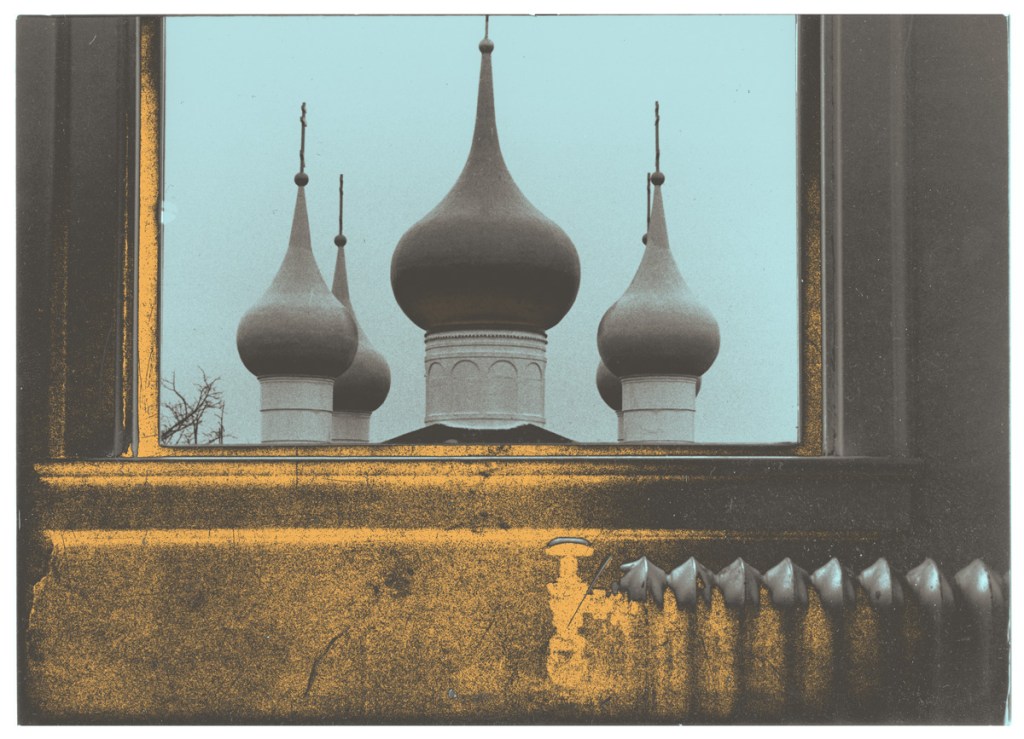
I first began to hear the phrase “sense of place” in the late 1970’s. At that point in my life my experience of travel was limited. I had no car, no money, no formal education beyond the 10th grade of highschool, and a three-speed bicycle. I lived in a 400-square foot studio with cut glass doorknobs and a tiny tiled kitchen that matched thousands of other kitchens in the historic apartment neighborhoods of Seattle. Because I had no car and did not know how to drive I went only where my bicycle, my feet or a bus could take me. My routines were small and circumscribed by economic and spiritual urgency. I rose at 5 AM, practiced Tai Chi and yoga, and rode my bicycle to Chinatown 3 times a week to the martial arts club. I sat every day at a window overlooking the domes of the Russian Orthodox church, and practiced calligraphy, grinding ink on a slab of black stone and learning kanji and sumi with a series of Chinese and Japanese masters.
My view of geography looked not to the globe, but inward, to the imagined and remembered. I built my landscapes from books, the soundtracks of childhood movies, and the Shambhalic images of transcendent consciousness adrift in the incense of the West Coast. I did not call this “place,” but it was where I lived. When I heard people talk about sense of place and where they had traveled (sense of place was never right “here”) I sniffed privilege: money, mobility and education. I wrote it off as pretension, particularly when people talked about Taos and New Mexico, their stories always accompanied by knowing glances and gestures towards the sky.
And yet it was in Taos that sense of place first hit me full force. Upon arrival at Los Gallos for Natalie Goldberg’s writing retreat I unpacked my bags, and found my way to a porch swing under an arbor. As I pushed the swing into the sky and looked behind me at Taos Mountain I was overwhelmed by a sensation of grandeur, joy and something else, unnameable. At the same moment I was convulsed with violent sneezes: the announcement of cottonwood’s white snow falling from acloudless sky. There is argument about the word “sense” in “sense of place.” Some claim that place is insensible, that stones and dirt cannot see or smell, that the wording projects life where it does not belong. Genius loci, or “spirit of place” was the common usage in earlier centuries. You will find no argument with this in the Taos pueblos. I do believe cottonwoods, born of rocks and dirt and incapable of writing poetry, have a spirit, and once I inhaled it I was never the same. Perhaps the cottonwoods changed too.
With cynicism at bay, and higher altitudes literally taking my breath away, I acclimated. As I immersed myself in writing as a practice of awareness I realized that everything was about sense of place or its absence, and learning the language of place was at the heart of good writing or any form of visual art. A vase is defined not just what it holds, but by reflected light along its rim. The color of canyons is affected by planes above and below: the lake in the mesa, the refracted lassitude or fury of the sky. Every object and being is in a state of being influenced by what surrounds it.
I had not needed to travel because where I lived, in my little apartment where the bedroom window opened Sundays onto the choir loft of the Russian church, was radiant with place. For twenty years I watched the lives of the nuns who came and went and kept rabbits in the window well of an ancient Pontiac, the gnarled farmer on the corner who defended his orchard with a pitchfork and gun, the man across the hall who carpeted his floors with rubber turf and played golf all night, the click of little white balls orbiting my dreams. As a pedestrian and cyclist I knew every alley, every hidden stair and every vista of my 2-mile square hill.
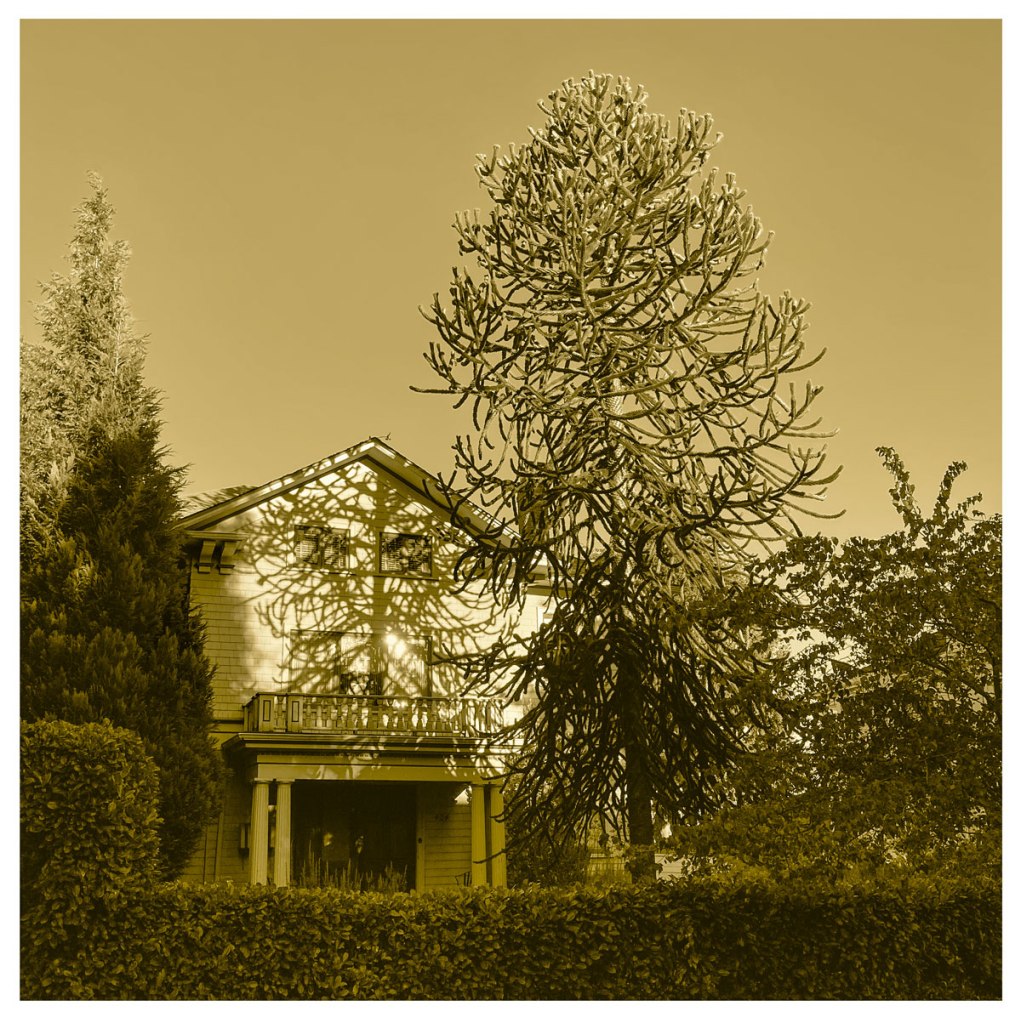
My life was small, but enlarged by curiosity, and enriched by the particularity of the place and time. Seattle is a young city, but one old enough to have been burned down once and reborn. Rebuilt from wooden cinders, it had enough brick and stone and tera cotta to absorb weather with dignity. Its gardens, presided over by Craftsman and Victorian homes ornamented in wood and beveled glass, were Arcadian in their beauty. The neighborhoods I lived in were not built on the bland template of the suburban expansion, but on “the art of assemblage,” mixing styles and genres within the Victorian, Tudor, Craftsman and Romanesque vernacular of the time. In spite of the mixing of style the overall sense was cohesive, and harmonious.
I got used to beauty, and it never occurred to me it had anything to do with money. For long years, houses were cheap: in 1954 my mother bought her lake view home for $12,000. The dissonance between then and now, when that house recently resold for $2.4 million puts what I took for granted under the magnifying glass of class. I live now in a city upended by housing costs, and a local economy that takes for granted that there is at least one millionaire on every block. I have been displaced multiple times, first because of escalating studio rents and later by the cost of owning a home. I am an exile from the neighborhoods of beauty as I understood it, and have lived for over 20 years in an edge zone only recently annexed to the city proper. When I announced to my Capitol Hill friends that I was moving to a neighborhood north of 85th they had to be shown where it was on a map. They shook their heads sadly and said, “but you are moving where there is nothing.” I admitted that in my new zipcode a vine growing on chain link showed pride of ownership, and resigned myself to a life without visitors.
Exile of many kinds, being in edge zones, both emotional and geographic, not knowing where I belong, has shaped my life from childhood. It has left me with a permanent sense of longing, made bearable as I have come to see the larger picture in which longing sits. When I began developing my blog I planned to include “sense of place” in the title. As I researched, however, I discovered many others had staked a claim. I was particularly struck by the work of scholar Ted Relph, whose astonishing compendium of place (at placeness.com) would take weeks to explore. Relph is a thinker worth following at length. His project is a vital resource for understanding how awareness of place fits in every sphere of life over time, and encompasses an overwhelming range of topics ranging from religion, architecture and geography to politics, ecology, science and much more. I owe Relph a debt of gratitude for affirming how essential the idea is to understanding both personal and larger history and where we are now.
My current neighborhood, placeless as I once thought it, now finds its modest homes and backyard forests under assault from the twin forces of market urbanism and private equity development. Pride of ownership is replaced by a state of legislated impermanence, as bulldozers come to every block, and the vine on chain link becomes mere landfill. This week I have joined neighbors and supporters of Seattle’s urban forest to protect ancient cedars on the site of what was, until this week, one of our rare log cabins. The poetics of place, it turns out, include heavy machinery.
Recent economic and demographic changes have accelerated the erasure of history and nature from our towns and cities. In coming essays I will look at different aspects of gentrification, development and preservation movements – and the collateral damage of idealism.


 The Iskra Journal
Leave a reply to TheIskraJournal Cancel reply